
DJ or a live band? This is one of the first questions that comes up when planning the music for a 2027 wedding - and one that couples hesitate over the most. Both options have their devoted fans, and both can keep guests on the dance floor from the first song to the last, but they work by completely different rules. In this article we show what actually sets a DJ apart from a live band, what to look out for when choosing, and - from our experience at Matt Remay Group - what this looks like in practice at weddings in Kraków and Lesser Poland.
A wedding DJ - flexibility and full control over the repertoire
A DJ's biggest advantage is repertoire flexibility. A good DJ has access to practically the whole history of music - from forty-year-old hits, through disco polo, to the latest chart songs - and can react in real time to what's happening on the dance floor. If older guests want to slow things down, and a moment later the younger generation asks for something louder, the DJ can change the mood within seconds, with no pause to tune up or swap instruments. It's this continuity of play - no gaps between songs - that keeps the dance floor fuller for longer.
The second major advantage is space. A professional DJ setup takes up far less room than a stage for a band, which matters in smaller venues or intimate outdoor settings. A DJ who also works as the MC and hostalso guides guests through the evening's agenda - announcing toasts, introducing the cake, coordinating attractions - so the couple doesn't have to worry about the evening's logistics. In our offer, it's exactly this combination of DJ and host in one person that couples most often choose when they want to be sure the evening is led by someone with a feel for the room, not just a random microphone.
It's also worth remembering that a good DJ is not just equipment and a playlist, but above all a feel for the room. An experienced performer watches how guests react, adjusts the volume and tempo to the time of the evening, and when needed can smoothly move from gentle dinner music to an energetic dance set without breaking anyone's mood. It's this ability to read the crowd, not the size of the music library, that sets a truly good DJ apart from someone who just plays song after song from a playlist.

A live band - concert energy and live sound
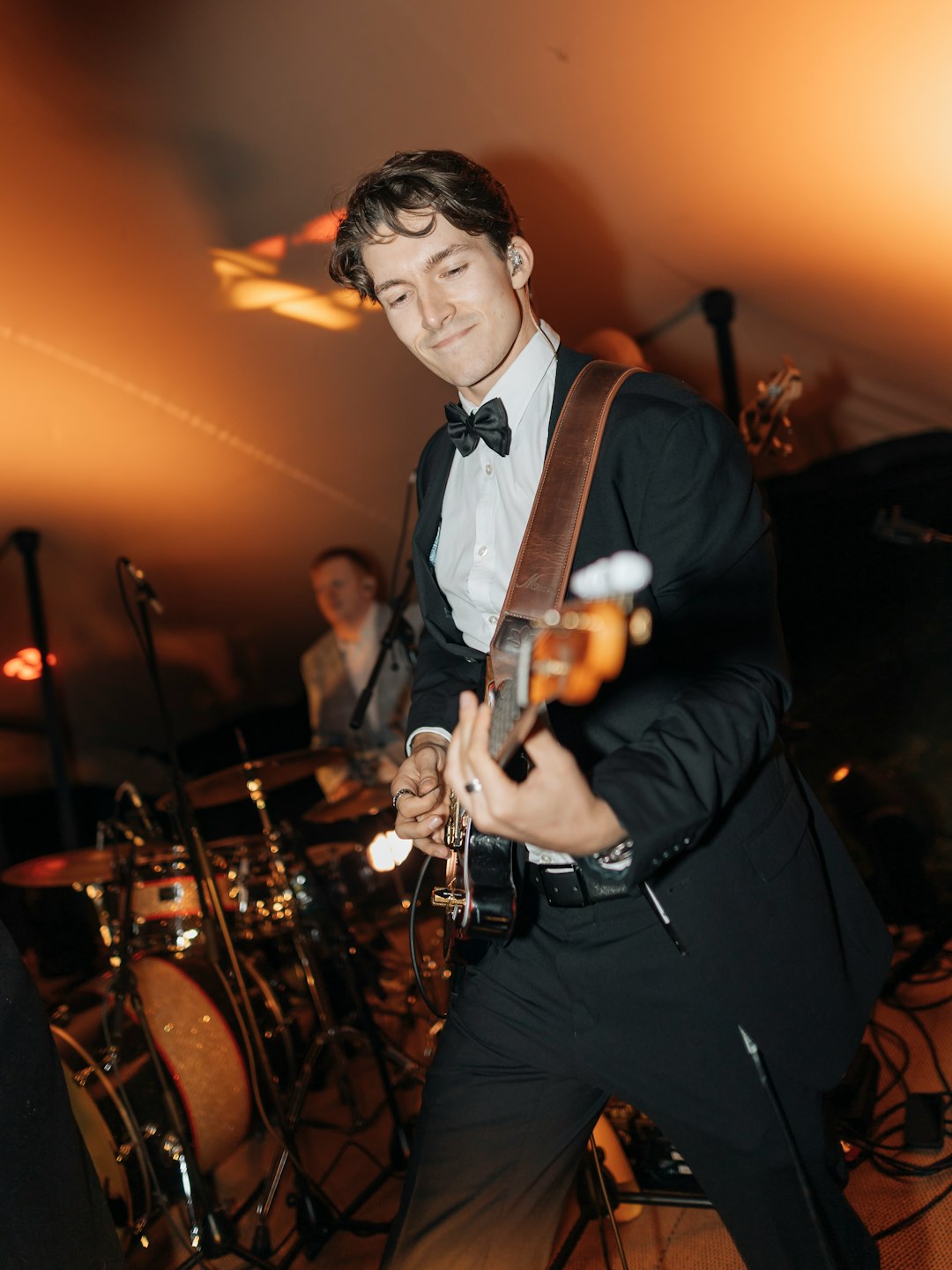
A live band at a wedding gives you something no equipment can fake - concert energy. Live instruments, live vocals and direct contact between the musicians and the guests create an atmosphere many people look for, especially at larger weddings or outdoor events where spectacle matters. A band also works well when a couple dreams of a specific musical style - a jazz dinner, a rock party or a classic wedding combo - because the musicians can build the whole evening around one coherent aesthetic.
A live band also impresses guests in a completely different way - the sight of musicians playing on stage, a singer interacting with the room, or a spontaneous encore after applause are moments hard to recreate at a mixing desk. For couples who see their wedding as a chance to show their own musical taste in a more concert-like form, this option is simply more authentic and memorable.
The downside is naturally less repertoire flexibility - even the best band has a limited list of songs it can perform at a high level, and breaks between sets (usually 15-20 minutes every hour) need to be planned so they don't knock guests out of the party rhythm. For this reason, many couples choose a hybrid solution: a band for part of the evening and a DJ for the breaks and the end of the party, when uninterrupted energy on the dance floor matters most.
Budget: how much does a DJ cost versus a wedding band
The price difference can be noticeable. A DJ with sound, lighting and hosting duties is usually cheaper than a live band, because it involves one person (plus maybe a small technical crew) rather than several musicians with their own equipment and travel time. A live band - especially a larger one with a brass or string section - costs more in proportion to the number of performers and playing time, and extending the repertoire or adding extra sets usually means an extra charge. If budget is a priority, it's also worth remembering decorative lighting the venue's lighting - with a DJ this is usually bundled with the sound system, while with a band it's often a separate order.
The final price always depends on the number of hours played, the wedding location, the scope of equipment and any extra attractions. So before comparing offers, it's worth writing down a precise plan for the evening - the start time, expected number of guests, the character of the venue - and asking for a quote tailored to those specific conditions, rather than a rough price list found online.
Szerzej o tym, z czego składa się taka wycena, piszemy w artykule ile kosztuje DJ na wesele w Krakowie.
The hybrid solution - the best of both worlds
Coraz więcej par na wesele 2027 wybiera opcję pośrednią: krótki set zespołu na żywo – na przykład podczas kolacji, powitania gości czy pierwszego tańca – a potem DJ, który przejmuje parkiet na resztę nocy. To rozwiązanie łączy prestiż i emocje grania na żywo z elastycznością i nieprzerwaną energią, jaką daje DJ. Dobrym przykładem jest też połączenie żywego instrumentu – skrzypiec, saksofonu czy wiolonczeli – z DJ-em grającym w tle, co pozwala wzbogacić brzmienie bez rezygnowania z szerokiego repertuaru.
If you want a strong, memorable moment, it's also worth considering special effects at a key point in the evening - for example heavy smoke for the first dance, which works beautifully both with a live performance and with a track played by a DJ. It's details like this - not the form of the musical setup itself - that usually decide whether guests remember the wedding as truly special.
Choosing between a DJ and a band isn't just about sound, it's also about organizing the day. A live band needs more time to set up the stage, instruments and sound check - in practice the crew may need access to the venue several hours before the reception starts, and the stage itself takes up space that has to be factored into the table layout. A DJ usually sets up faster, and compact equipment is easier to fit even into small, historic venues where every square metre counts.
The second issue is power supply and room acoustics. A large band with electric instruments needs a stable, dedicated power circuit and enough sockets near the stage, and venues with high ceilings or stone walls can create strong reverb, which requires an experienced sound engineer to avoid an echo effect. That's why, regardless of the chosen format, a good practice is an on-site venue visit or at least a detailed description of the room shared with the performers in advance. This helps avoid unpleasant surprises on the wedding day, when there's no time left to fix things.

How to choose - questions worth asking yourself
Before you decide, ask yourselves a few questions: What character should the wedding have - intimate and elegant, or a lively party until dawn? How many people will be in the room and how much space is there for a stage or DJ booth? Do you want a specific musical style, or rather a wide selection matched to the tastes of guests from different generations? And finally - should someone actually host the evening, announcing the program and coordinating attractions, or would you rather hire a separate host for that?
The answers to these questions usually point quickly to the right direction. For weddings with a large, age-diverse group of guests, a DJ working as MC usually works best - precisely because of the flexibility and continuity of the party. For couples who dream of a more intimate, concert-like atmosphere, a band is the natural choice, possibly combined with a DJ for the rest of the night.
Whether you choose a DJ or a band, it's worth reading the contract carefully before signing. It should clearly state the number of hours played, the start and end time, the scope of sound and lighting equipment, and who is responsible if the party runs over the agreed time. It's also good to ask about a backup plan - whether, if the main performer falls ill, the band or agency provides a substitute of a similar level, and whether the equipment has a backup power source in case of a power outage at the venue.
It's also worth agreeing how you'll work together on building the repertoire. Professional performers - whether DJs or bands - usually suggest an earlier meeting or a music questionnaire, where the couple can list must-play songs, a do-not-play list, and the family's expectations. Having this conversation a few weeks before the wedding helps avoid misunderstandings and gives the performer time to prepare for the specific audience, instead of improvising from scratch on the day of the event.
One last, often overlooked factor is experience with the specific venue. A performer who has already played in that wedding venue, or in a similar type of space - a barn, a palace, a hotel - knows its acoustics, socket layout and spatial limitations, which significantly shortens setup time and reduces the risk of technical surprises. When asking for references, it's worth asking not just about general experience, but also about specific events held in your region.
Plan your wedding music together with us
Whether you choose a DJ, a live band or a hybrid solution, the key to a successful evening is an experienced team that senses the mood of the room and can guide guests from the ceremony to the last dance. At Matt Remay Group we've been providing wedding music in Kraków and Lesser Poland for years - we match equipment, repertoire and hosting style to each couple's character, not a ready-made template. If you're wondering what will work best at your wedding, get in touch with us - let's work out together a music scenario you'll remember as fondly as your guests will.
Quick enquiry
Check date availability
Tell us the date and venue of your wedding – we'll get back to you with availability and a quote. We serve Kraków, Lesser Poland and all of Poland.
+48 608 591 907Fastest by phone or through this short form. Want to describe your event in more detail? Full contact form


